
Crowded Teeth in Children: Could Early Orthodontic Treatment Make a Difference?
A child’s crowded teeth can be easy to overlook at first. Maybe a tooth is coming in behind another, spaces seem to be disappearing, or your child’s front teeth look more overlapping than they used to. These changes may seem like a normal part of growing up, but sometimes they signal that the developing smile needs a closer look.
For parents, the big question is simple: Should you wait and see, or have your child evaluated now? Understanding how the teeth and jaws develop can help you make a more informed decision about your child’s oral health.
What Causes Crowded Teeth in Children?
Crowding happens when there is not enough room in the mouth for permanent teeth to come in properly. As adult teeth replace baby teeth, they may erupt at an angle, overlap neighboring teeth, or become partially blocked.
Several factors can contribute to crowding, including:
- Jaw growth that does not provide enough space for developing teeth
- Larger permanent teeth compared with available space
- Premature loss of baby teeth
- Baby teeth that remain in place longer than expected
- Tooth development or eruption patterns
- Family history of crowded teeth or orthodontic concerns
Crowding does not always mean that your child immediately needs braces. However, an evaluation by an orthodontist can help determine whether the teeth and jaws are developing as expected.
When Should Parents Have Crowding Checked?
You do not necessarily need to wait until all of your child’s permanent teeth have come in before seeking advice.
An orthodontic evaluation can help identify developing concerns while your child’s mouth is still growing. Depending on what the orthodontist sees, treatment may be recommended right away, monitored over time, or postponed until a later stage of development.
This is where early orthodontic treatment may have a role for some children. The goal is not simply to straighten visible teeth. In appropriate cases, treatment can address developing alignment or space concerns while the jaws are still growing.
Signs Your Child May Need an Orthodontic Evaluation
Every child’s development is different, but certain changes deserve attention.
Look for:
- Teeth that overlap or appear noticeably crowded
- Permanent teeth erupting behind or in front of baby teeth
- Difficulty biting or chewing comfortably
- Teeth that appear unusually rotated
- Early or unexpected loss of baby teeth
- Frequent mouth breathing
- Noticeable jaw shifting when biting
- An upper or lower jaw that appears significantly out of alignment
- Difficulty keeping crowded areas clean
If you notice one or more of these signs, talk with your child’s Dentist or orthodontist. A professional evaluation can provide a clearer picture than simply watching the teeth at home.
How Can Early Care Help?
Early orthodontic care is not about rushing children into braces. Instead, it gives an orthodontist an opportunity to observe how the teeth and jaws are developing.
For children with certain developing problems, treatment may help:
- Create or preserve room for permanent teeth
- Guide developing teeth into a healthier position
- Address certain bite problems
- Improve the relationship between the upper and lower jaws
- Make future orthodontic treatment more predictable
- Support easier cleaning when teeth become properly aligned
These are some of the early orthodontic care benefits that may apply when treatment is recommended at the right stage.
Importantly, not every child with crowded teeth needs immediate treatment. Sometimes the best approach is simply regular monitoring while growth and tooth eruption continue.
What Happens During an Orthodontic Evaluation?
Parents often worry that an orthodontic visit will automatically lead to braces. It does not have to.
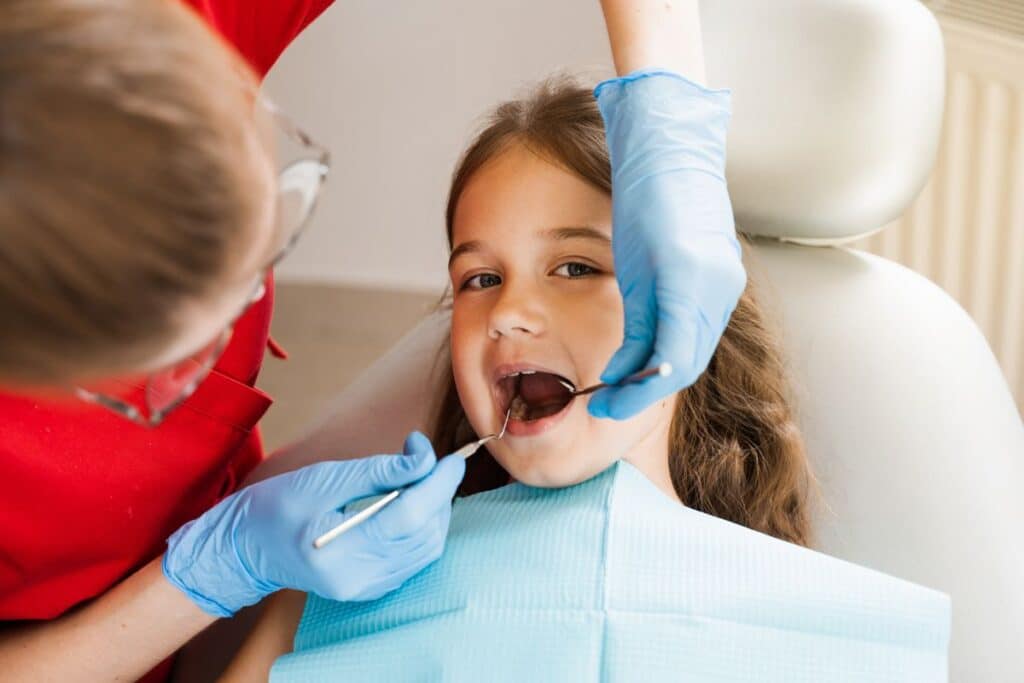
During an evaluation, the orthodontic team may look at your child’s teeth, bite, jaw development, facial growth, and tooth eruption pattern. Depending on the child’s individual needs, diagnostic images may also be recommended.
The orthodontist can then explain what is happening and whether your child would benefit from treatment now or observation over time.
Having that information can take much of the guesswork out of the process.
Why Local Families Should Not Ignore Developing Crowding
For families in the local community, children’s schedules can fill up quickly with school, sports, activities, and family commitments. It can be tempting to put off an orthodontic concern when your child is not experiencing pain.
But crowding is often easier to understand when it is evaluated during development rather than after all the permanent teeth have erupted.
A local orthodontic office can also make ongoing observation and follow-up more convenient for families who live, work, or attend school nearby.
Frequently Asked Questions
Can crowded baby teeth indicate future orthodontic problems?
They can sometimes be an early sign of limited space or developing alignment concerns, but baby teeth alone cannot determine whether treatment will be necessary. An orthodontic evaluation provides more useful information.
Does every child with crowded teeth need braces?
No. Some children may benefit from treatment, while others may only need periodic monitoring. The recommendation depends on tooth development, jaw growth, bite, and the child’s individual needs.
What age should a child see an orthodontist?
The American Association of Orthodontists recommends that children have an orthodontic checkup by around age seven. An earlier visit can also be appropriate when parents or a dental professional notice a specific concern.
Can an orthodontist monitor crowding without starting treatment?
Yes. In some situations, observation is appropriate. An orthodontist can monitor tooth eruption and jaw growth and recommend treatment if the child’s needs change.
Should I ask my child’s Dentist about crowded teeth?
Absolutely. Your child’s Dentist can discuss what they are seeing during routine dental visits and recommend an orthodontic evaluation when appropriate. Early communication can help parents understand their child’s developing smile.
Give Your Child’s Growing Smile the Attention It Deserves
Crowded teeth do not always require immediate treatment, but they are worth paying attention to. A timely orthodontic evaluation can help parents understand whether the teeth simply need more time or whether guidance during growth could be beneficial.
If you have noticed overlapping teeth, limited space, or changes in your child’s bite, contact Solomon Orthodontics to schedule an appointment and learn more about your child’s orthodontic needs.