
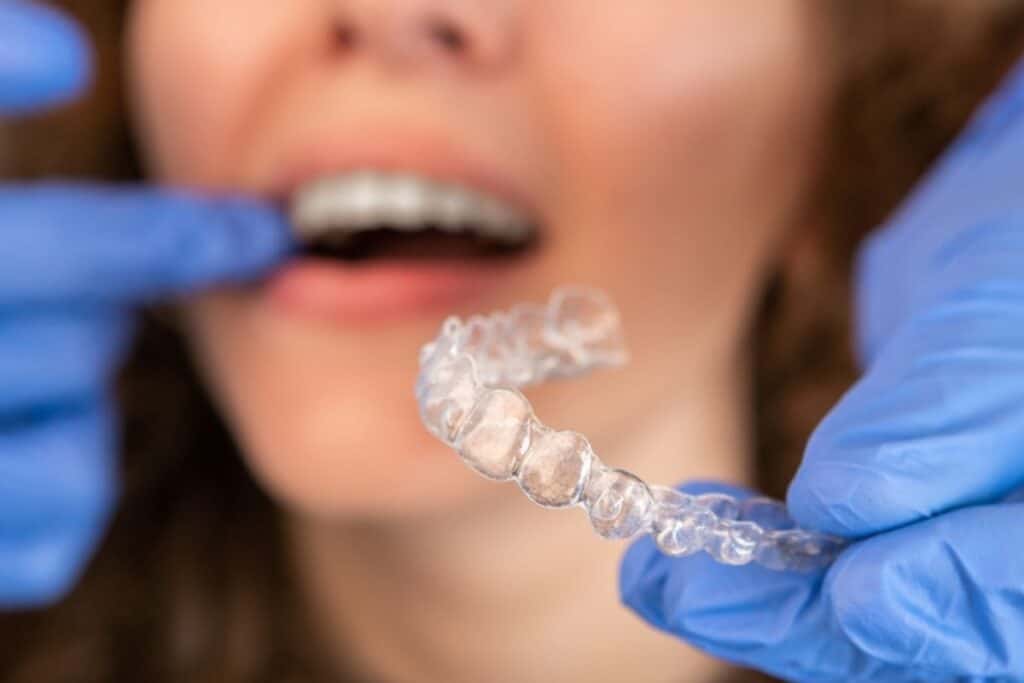
Can You Wear Invisalign Only at Night?
Many patients are drawn to Invisalign when considering orthodontic treatments due to its clear aligners and nearly invisible appearance. However, questions often arise about the flexibility of wearing Invisalign, especially for those who want to limit daytime use. A common query is, “Can you wear Invisalign only at night?” Let’s explore this question in detail and understand why full-time wear is essential for effective Invisalign treatment.
How Does Invisalign Work?
To understand whether Invisalign can be worn only at night, it’s important to know how it works. Invisalign aligners are custom-made trays designed to apply gentle pressure on your teeth, gradually moving them into their proper positions.
This process depends on consistent wear, as the aligners need to maintain pressure over extended periods to shift your teeth effectively. The standard recommendation from orthodontists is to wear Invisalign aligners for 20-22 hours per day, removing them only for eating, drinking (anything but water), and oral hygiene routines.
The Concept of Wearing Invisalign at Night Only
Wearing Invisalign exclusively at night might seem like a convenient option, especially for individuals with active lifestyles or self-consciousness about wearing aligners during the day. However, this approach significantly reduces the aligners’ effectiveness and can prolong treatment time.
Orthodontic treatments like Invisalign rely on constant force to create gradual, controlled tooth movements. Wearing aligners only at night means the aligners are only applying force for about 8-10 hours daily instead of the recommended 20-22 hours. This inconsistency may disrupt the treatment progress.
What Happens If You Wear Invisalign Only at Night?
If you limit Invisalign to nighttime wear, the following consequences may arise:
1. Delayed Results
Wearing aligners for fewer hours reduces their ability to maintain pressure on your teeth. This can lead to slower movement, meaning your treatment will take much longer than initially planned.
2. Poor Fit Over Time
Skipping daytime wear can cause your aligners to stop fitting correctly. Teeth can shift back to their original positions during the hours when aligners aren’t worn, leading to discomfort and compromised results.
3. Increased Risk of Orthodontic Issues
Inconsistent wear can create gaps in treatment progress, leading to uneven tooth movement. This may result in complications, such as misaligned bites or incomplete corrections.
4. Higher Costs
Prolonging your treatment may require additional aligners, increasing the overall cost. If your aligners become damaged or no longer fit properly, you may also need replacements.
Why 20-22 Hours of Wear is Crucial
Invisalign aligners are designed to exert a light, continuous pressure on your teeth. This pressure prompts the bone and tissues around your teeth to remodel, allowing your teeth to shift gradually.
By wearing your aligners for 20-22 hours daily, you give your teeth the best chance to move effectively and stay in their new positions. Reducing wear time disrupts this process, making it harder for your teeth to adapt to their new alignment.
Are There Any Exceptions?
For some patients, part-time Invisalign wear may be considered under special circumstances, such as:
- Retention After Treatment: Once the active alignment phase is complete, a retainer (similar to Invisalign aligners) may be worn only at night to maintain your results.
- Mild Cases: Patients with minor alignment issues may sometimes wear aligners for fewer hours, but this is always at the discretion of an orthodontist.
It’s essential to discuss your unique case with your Invisalign provider to determine the best treatment plan.
Tips to Make Full-Time Wear More Manageable
If you’re hesitant to wear Invisalign during the day, here are some tips to help you stay on track:
1. Focus on the Invisible Nature of Invisalign
Remember that Invisalign aligners are virtually invisible. Most people won’t even notice you’re wearing them, making them ideal for social and professional settings.
2. Establish a Routine
Incorporate Invisalign into your daily habits. Set reminders to put your aligners back in after meals and hygiene routines to ensure consistent wear.
3. Practice Confidence
Feeling self-conscious? Remind yourself that Invisalign is temporary, and the end result—a beautiful, straight smile—is worth the effort.
4. Keep Your Aligners Clean
Proper cleaning can keep your aligners clear and odor-free, making them less noticeable. Use a soft toothbrush and Invisalign cleaning crystals to maintain their transparency.
The Role of Orthodontic Supervision
Your Invisalign provider plays a vital role in ensuring the success of your treatment. Regular check-ins allow your orthodontist to monitor your progress and make adjustments as needed. They’ll also provide guidance on wear times based on your specific needs.
If you’re considering nighttime-only wear, it’s crucial to have an open conversation with your orthodontist. They can explain how this would affect your treatment and help you set realistic expectations.
While the idea of wearing Invisalign only at night might sound appealing, it’s not recommended for active treatment. Consistent wear for 20-22 hours per day is essential to achieve the desired results within the expected timeframe.
If you’re struggling with full-time wear, remember that Invisalign is designed to be discreet and comfortable, making it easier to stick to the treatment plan. With dedication and guidance from your orthodontist, you’ll be on your way to a straighter, healthier smile.
For those considering Invisalign, consult with a trusted provider to discuss your goals and determine the best treatment plan for your lifestyle.