
Two-Phase Orthodontic Treatment vs. Traditional Braces: What’s the Difference?
Straight teeth are not always the whole story. For some children, orthodontic care is about more than moving teeth into better positions—it is also about guiding jaw development, creating space, and correcting bite concerns while they are still growing.
That is where the timing of orthodontic care can make a meaningful difference. Some children may benefit from early treatment, while others can wait until most of their permanent teeth have developed before starting braces.
If you have been searching for two phase orthodontic treatment Killeen TX, you may be wondering how it compares with traditional braces. The answer depends on your child’s age, dental development, bite, jaw growth, and specific orthodontic needs.
What Is Two-Phase Orthodontic Treatment?
Two-phase orthodontic treatment is a personalized approach that uses treatment at two different stages of a child’s development.
Phase One typically takes place while a child is still growing and some baby teeth remain. The goal is not necessarily to straighten every tooth. Instead, early treatment may help address concerns such as:
- Crowding or lack of space
- Crossbites
- Open bites
- Deep bites
- Jaw development concerns
- Harmful oral habits
- Permanent teeth that may have difficulty erupting properly
After the first phase, there is generally a monitoring period while the child continues to grow and permanent teeth come in.
Phase Two focuses on bringing the teeth into their final positions and creating a healthy, functional bite. Braces or another orthodontic appliance may be used during this stage.
Solomon Orthodontics notes that early treatment can include expansion, active retainers, or partial braces, depending on the child’s needs.
How Are Traditional Braces Different?
Traditional braces generally begin when most or all permanent teeth have erupted and the patient is ready for comprehensive orthodontic treatment.
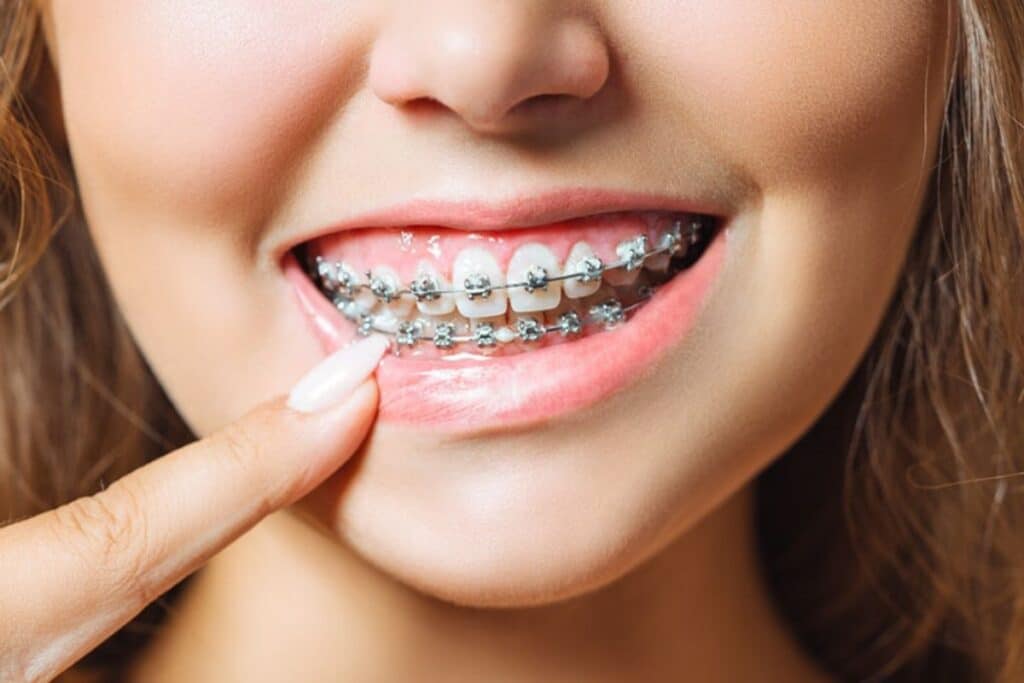
Brackets are attached to the teeth and connected with archwires. Gentle, controlled forces gradually move the teeth into better alignment and improve the bite.
Traditional braces can be an excellent option for many teens and adults. They are also just one choice among the different orthodontic treatments available today.
The right approach depends on what needs to be corrected—not simply on which treatment looks most convenient.
Two-Phase Treatment vs. Traditional Braces
Think of it this way:
Two-phase treatment
- Starts earlier when specific problems may benefit from intervention during growth
- May guide jaw development or create space for permanent teeth
- Uses separate treatment stages
- Includes a monitoring period between phases
- Can help address certain developing bite problems
Traditional braces
- Usually begin when permanent teeth have erupted sufficiently
- Focus primarily on comprehensive tooth and bite alignment
- Generally involve one main active treatment period
- Can be appropriate for teens and adults
- May be recommended when early intervention is not necessary
Neither approach is automatically better. A child who needs early intervention should not necessarily wait for traditional braces, while a child without a significant developmental concern may not need two phases of treatment.
Why Timing Matters for Growing Children
Children’s jaws and facial structures are still developing. That creates an opportunity to address certain orthodontic concerns while growth is occurring.
For example, early treatment may help guide permanent teeth into more favorable positions or address a bite that could become more difficult to correct later.
Solomon Orthodontics recommends an early orthodontic evaluation and evaluates factors such as age, bite, skeletal structure, spacing, and dental development before creating an individualized plan.
An evaluation does not automatically mean your child needs braces right away. Sometimes the best recommendation is simply to monitor development and begin treatment at the appropriate time.
What About Orthodontics for Adults?
Two-phase treatment is primarily associated with growing children, but orthodontic care is certainly not limited to kids and teens.
Adults can benefit from orthodontics for adults Killeen TX when they have crowded teeth, spacing, bite problems, or other alignment concerns. Depending on the case, treatment may involve traditional braces, clear braces, or clear aligners.
Solomon Orthodontics provides orthodontic care for adults as well as children and teens, with treatment options that can be customized to individual needs.
Signs Your Child May Benefit From an Early Evaluation
Consider scheduling an orthodontic evaluation if you notice:
- Teeth coming in unusually crowded or displaced
- Difficulty biting or chewing normally
- An upper or lower jaw that appears significantly out of position
- A crossbite or open bite
- Thumb or finger-sucking habits that continue beyond early childhood
- Permanent teeth struggling to erupt
- Teeth that overlap or have very limited space
Some concerns may be easier to manage when identified early, while others may simply need observation.
Making Orthodontic Care Easier for Killeen Families
Life in Killeen can move quickly, especially for families balancing school, work, sports, activities, and military schedules connected with the Fort Cavazos community.
Convenient orthodontic planning can make treatment easier to fit into everyday life. Solomon Orthodontics has a Killeen office on S. WS Young Drive and also serves families from the surrounding Central Texas communities, including Salado.
During an orthodontic consultation, families can discuss treatment timing, expected visits, appliances, and what to expect at each stage. The practice also works with patients to make appointments as convenient as possible.
Tips for Parents Considering Orthodontic Treatment
Start with an evaluation.
You do not have to decide on braces before seeing an orthodontist. An evaluation can help determine whether treatment is needed now or later.
Ask about growth and development.
For younger children, jaw growth and permanent tooth development can influence the recommended timing.
Look beyond appearance.
Orthodontic care can also address bite, function, spacing, and tooth positioning.
Follow the recommended schedule.
If your child is placed on a monitoring plan, keep those visits. Development can change over time.
Choose treatment based on individual needs.
There is no universal orthodontic treatment that works best for every patient.
Frequently Asked Questions
Is two-phase orthodontic treatment necessary for every child?
No. Two-phase treatment is recommended only when an orthodontist identifies a developmental or alignment concern that may benefit from early intervention. Some children can wait until they are ready for comprehensive treatment.
Does two-phase treatment mean wearing braces continuously?
Not necessarily. The first phase may involve an expander, partial braces, or another appliance. There may then be a period of observation before comprehensive treatment begins. The exact plan depends on the child.
Can traditional braces correct the same problems?
Traditional braces can correct many tooth and bite problems, but timing matters. Certain developmental concerns may be easier to address while a child is still growing. An orthodontic evaluation can determine which approach is appropriate.
Can adults get orthodontic treatment?
Yes. Adults can receive orthodontic treatment when they want to improve tooth alignment or correct bite concerns. Treatment options may include traditional braces, clear braces, or clear aligners, depending on the case.
When should my child see an orthodontist?
An early evaluation can help identify developing concerns before they become more complicated. The American Association of Orthodontists recommends that children have their first orthodontic evaluation by age seven, although treatment may not be needed at that time. Solomon Orthodontics also provides early evaluations to assess developing teeth, bite, spacing, and jaw growth.
The Right Time for Orthodontic Care Starts With the Right Evaluation
Choosing between early orthodontic treatment and traditional braces is not about picking the newest or most popular option. It is about understanding what your child’s teeth and jaws need—and when they need it.
If you are noticing crowding, bite problems, unusual tooth eruption, or other changes in your child’s developing teeth, an orthodontic evaluation can give you clear answers and a practical path forward.
Ready to find out what treatment makes sense for your family? Contact Solomon Orthodontics to schedule an orthodontic consultation in Killeen and take the next step toward healthier, better-aligned teeth.